
On the Air When it Matters Most
Public Radio Connects AmericaDon’t Let Local Independent Voices Go Silent

Let Your Voice Be Heard
With reduced resources and an uncertain future, independent local public radio stations are fighting to survive. Stations serving rural, remote, and tribal communities face greater risks than ever before, but every station is facing financial headwinds. Contact your lawmakers to prevent listeners across America from being left in the dark.
Tell Congress: support the stations that connect my community.
Note: The [Lawmaker] field in the above contact message will automatically generate the name(s) of your elected officials when sending your message.
By providing my phone number, I agree to receive texts about public radio advocacy. Texts may be automated or nonautomated. Msg & data rates may apply. SMS Terms, Terms and Conditions, and Privacy Policy apply.


Public Radio:
By the Community, For the CommunityAfter decades of bipartisan support, the elimination of federal funding left public radio stations facing budget challenges, operational hurdles, and an uncertain future. Local stations are resilient and communities are supportive, but without dedicated federal support, the entire public media system — and especially broadcasters in the country’s most rural and underserved communities — is in jeopardy.
The universal access provided to 99% of Americans across all 50 states is an invaluable civic resource. Now, more than ever, we must secure new federal support for the stations you rely on. We need you — your voice, your support, and your action — to keep your community connected.
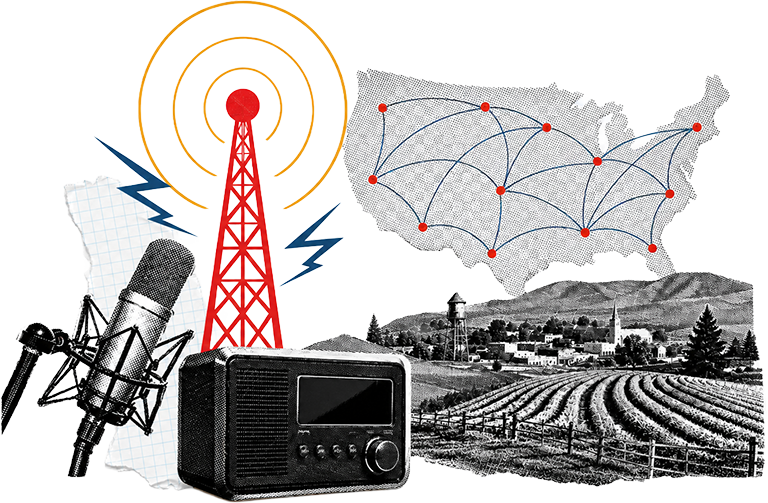
Supporting Rural, Remote, and Tribal Communities
The Rural Radio Resiliency FundThe Challenge:
Local public radio stations are vital for reaching rural, remote, tribal, and otherwise underserved communities. But with the rescission of federal funding last year, with every local station impacted, these stations are now among the most financially vulnerable broadcasters in the country.The Solution:
The Rural Radio Resiliency (RRR) Fund is a dedicated, operations-focused program supporting independent local public radio stations that serve rural, remote, and tribal communities. This new program strengthens continuity and modernization of public radio stations serving the country’s most underserved areas.
Why RRR Works
- Provides necessary operational and infrastructure support to the most vulnerable stations
- Supports and is backed by state and local emergency managers and first responders
- Ensures at-risk communities are never left without access to emergency information and alerts
- Enhances station infrastructure modernization, operational continuity, equipment resiliency and redundancy, and cybersecurity capabilities
- Recognizes the value of tribal stations, meeting their needs through dedicated support and partnerships with tribal entities
- Prevents rural station closure, boosting the sustainability of the entire public radio network and keeping the programming you love on the air

What's at Stake

Severe Budget Shortfalls

Widespread Job Losses

Loss of Local News Coverage

Silencing Rural, Remote, and Tribal Communities

Loss of Public Safety Coverage & Emergency Alerting

Disappearance of Arts, Cultural, and Music Programming

Entire Stations Will Shut Down
Now is the time to secure a new future for the public radio stations that need it most. Lawmakers in Washington can make a difference, but they need to hear from you.
Contact your elected officials to secure the future of your local stations.